GEOTECHNICALENGINEERING1
ADELAIDE

Geotechnical Engineering in Adelaide

Site investigations you can build on.

LEARN MORE

Adelaide's subsurface tells a story of ancient landscapes, from the Proterozoic basement rocks of the Mount Lofty Ranges to the Quaternary alluvial sediments that fill the Adelaide Plains. The city sits on a complex mosaic of Keswick Clay, Hindmarsh Clay, and the notorious black cracking clays of the St Kilda formation, with groundwater levels often perched within 2 to 4 metres of the surface across much of the metropolitan area. A rigorous soil mechanics study becomes essential when you factor in the region's moderate seismicity, classified as Site Class C or D under AS 1170.4 depending on the depth to bedrock. Our NATA-accredited laboratory in Adelaide runs the full suite of index and strength tests, from Atterberg limits on reactive clays to consolidated-undrained triaxial testing when the project demands pore pressure parameters for effective stress analysis.

Adelaide's reactive Keswick Clay can swell by up to 40 mm seasonally; knowing the shrink-swell index from a proper soil mechanics study is the difference between a stable slab and costly underpinning.
Geotechnical Engineering in Adelaide
Technical reference — Adelaide

Our service areas

Local geology

A recent project on a sloping site in the Mitcham foothills illustrates why standard borehole logging alone falls short. The developer planned a three-level split-level residence cut into a weathered siltstone profile, and preliminary site investigation suggested competent rock at 1.8 metres. When we ran a full soil mechanics study including multi-stage triaxial tests on the residual soil horizon, the strain-softening behaviour at confining pressures below 150 kPa raised a red flag. The design team adjusted the footing geometry and incorporated subsurface drainage specified to AS 4678, avoiding what could have been differential settlement exceeding 25 mm. For sites near the River Torrens or in the western suburbs where soft estuarine clays extend to depths of 15 metres, we often pair the soil mechanics study with a dedicated liquefaction assessment following the Seed-Idriss simplified procedure, calibrated against SPT N-values corrected for the local fines content. The combination gives structural engineers the undrained shear strength profile and cyclic resistance ratio they need for a defensible foundation design.

Relevant standards

AS 1289: Methods of testing soils for engineering purposes (full suite, including compaction, classification, strength, and consolidation), AS 2870:2011 Residential slabs and footings, AS 1726:2017 Geotechnical site investigations, AS 4678:2002 Earth-retaining structures, AS/NZS 1170.4:2007 Structural design actions – Earthquake actions in Australia

Need a geotechnical assessment?

Reply within 24h.

Email: contact@geotechnicalengineering1.co

Why choose us

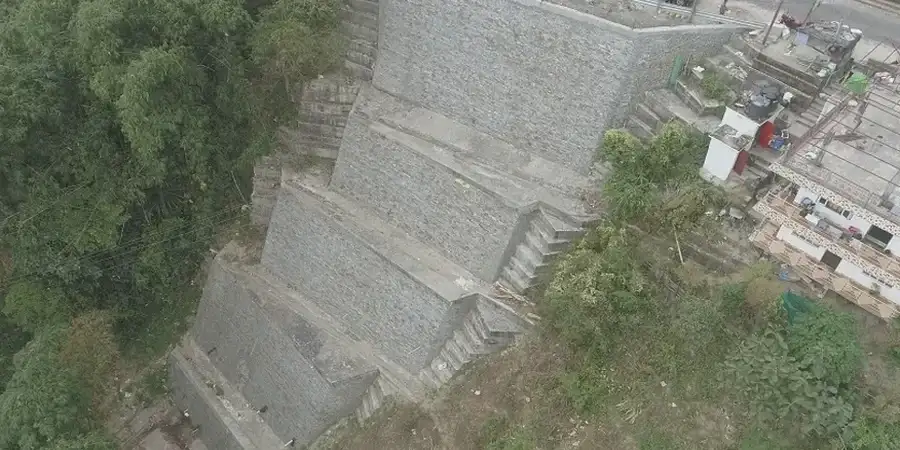
AS 2870:2011 governs residential slab and footing design across Australia, and in Adelaide the characteristic ground movement (ys) can reach 75 mm or more on highly reactive clay sites classified as Class H1 or H2. A soil mechanics study that skips the shrink-swell testing sequence, or that relies on visual-tactile classification alone without Atterberg limits and linear shrinkage, leaves the structural engineer blind to the actual reactivity. The consequence is not theoretical; the Insurance Council of Australia has documented hundreds of claims across Adelaide's north-eastern suburbs where reactive clay heave cracked stiffened raft slabs within the first two years of construction. Deep-seated slope instability is another hazard along the Adelaide Hills face, where the interface between colluvium and weathered bedrock acts as a preferential failure plane during prolonged rainfall events exceeding the 1-in-100-year ARI. A soil mechanics study that includes residual strength testing and pore pressure response provides the parameters for limit-equilibrium slope stability analysis under both drained and undrained conditions.

Typical values

ParameterTypical value
Sampling methodThin-wall Shelby tubes to AS 1289.1.2.1, hand-carved block samples in test pits
Moisture conditionAs-received, soaked, and target-moisture conditioning per AS 1289.5.1.1
Effective cohesion c'Measured via consolidated-undrained triaxial with pore pressure measurement (AS 1289.6.4.2)
Effective friction angle φ'Derived from Mohr-Coulomb failure envelope at 0.5–1.5% strain for serviceability limit state
Overconsolidation ratio (OCR)Oedometer consolidation test to 3200 kPa, unloading-reloading loop interpreted via Casagrande method
Shrink-swell index (Iss)AS 2870 shrink-swell test on remoulded specimens, 5-point shrinkage curve from liquid limit to air-dry
Residual friction angle φ'rRing shear or reversal direct shear at 0.002 mm/min, applicable to pre-existing shear surfaces in landslides

Quick answers

What is the typical cost of a comprehensive soil mechanics study for a residential project in Adelaide?

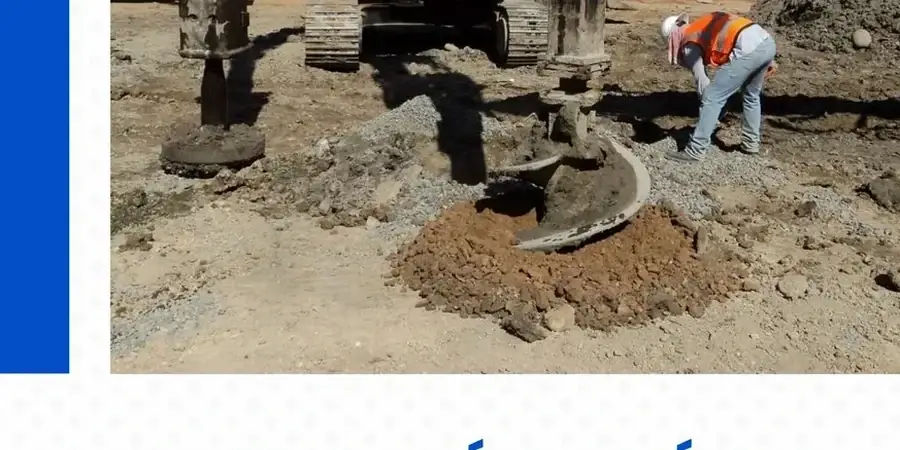
For a standard residential block in the Adelaide metropolitan area, a soil mechanics study including borehole drilling, laboratory classification, shrink-swell testing, and a geotechnical report compliant with AS 2870 typically ranges from AU$5.380 to AU$8.540, depending on the number of boreholes, the depth to refusal, and whether additional testing such as triaxial or consolidation is required. Sites with complex geology or slope stability concerns will fall toward the upper end of that range.

How does the Keswick Clay affect foundation design in Adelaide?

Keswick Clay is a moderately to highly reactive estuarine clay found extensively across the western and central suburbs of Adelaide. Its high plasticity and shrink-swell potential mean that moisture changes from vegetation, leaking services, or seasonal wetting-drying cycles can induce ground movements capable of damaging conventional stiffened rafts. A soil mechanics study quantifies the reactivity via the shrink-swell index and suction measurements so the structural engineer can specify the appropriate beam depth, reinforcement, and articulation per AS 2870.

How long does a soil mechanics study take from site investigation to final report?

The fieldwork, including borehole drilling or test pit excavation, is typically completed in one to two days for a residential site. Laboratory testing on reactive clays requires approximately 10 to 14 working days because the shrink-swell and consolidation tests involve staged loading and drying cycles that cannot be accelerated without compromising accuracy. The final geotechnical report is delivered within three weeks of site access for most standard projects.

Do I need a soil mechanics study if the neighbouring property already had one?

Yes, even adjacent lots in Adelaide can have significantly different soil profiles. The Quaternary sediments that underlie much of the city were deposited in a fluvial-lacustrine environment with sharp lateral facies changes; a sandy channel fill can transition to a deep reactive clay basin within 20 metres. Council and private certifiers will not accept a report from a neighbouring property as satisfying the requirements of AS 2870 or the National Construction Code for your specific site.

Location and service area

We serve projects in Adelaide and surrounding areas.

View larger map