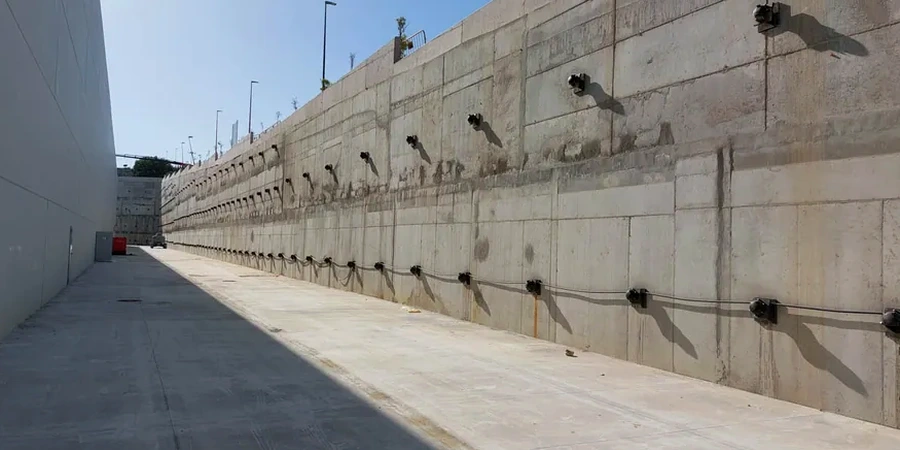
Adelaide's subsurface tells a story of Proterozoic basement rock, Pleistocene alluvium, and the highly reactive Keswick Clay that has caused millions in structural damage across the western suburbs. Designing a ground anchor here is not a one-size-fits-all exercise. The distinction between active anchors, which apply a pre-stress to the structure immediately upon installation, and passive anchors, which only engage when the ground moves, becomes critical when you are working adjacent to the Para Fault or in the soft sediments along the River Torrens. Our technical team approaches each anchor design by mapping the in-situ stress state against the bond length required in the specific weathered profile, ensuring the load transfer mechanism aligns with the site's stratigraphy. For projects near the Port River where sulfidic soils accelerate corrosion, specifying the correct double-corrosion protection class under AS 4678 is a non-negotiable part of the design process. Understanding this local geotechnical behaviour is what separates a durable anchoring solution from a costly remediation, and it starts with a comprehensive site investigation program to define the ground model accurately.
In Adelaide's reactive soils, the anchor bond zone must be placed beyond the depth of seasonal moisture variation to prevent creep rupture.