GEOTECHNICALENGINEERING1
ADELAIDE
HomeSlopes & WallsSlope stability analysis

Slope Stability Analysis in Adelaide: Managing Hills Face Zone and Reactive Clay Risks

Site investigations you can build on.

LEARN MORE

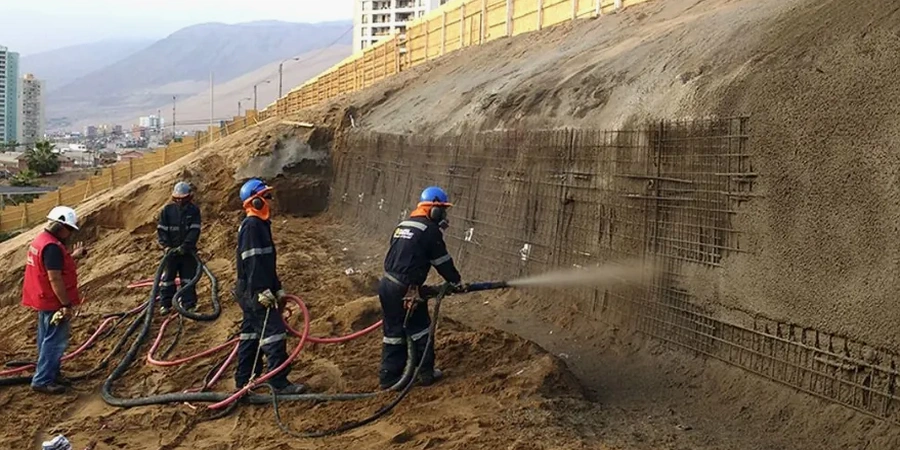
Adelaide's unique geography creates a sharp contrast between the flat coastal plains and the steep, dissected ranges of the Mount Lofty Ranges. The Hills Face Zone, in particular, presents a constant challenge for developers. Heavily fractured quartzite, interbedded siltstone, and thick layers of reactive clay define the subsurface here. Add the intense rainfall events that sweep across the Gulf St Vincent, and you have a high-risk environment for slope instability. We routinely assess these complex conditions. Our team combines geomorphological mapping with advanced limit-equilibrium modeling to quantify failure risk. Complementing this, we often integrate results from test pits to verify the surficial geology and identify ancient landslide debris. A proper analysis here isn't optional. It is the foundation of a safe project.

Adelaide's reactive clay slopes can lose over 60% of their shear strength when saturated, making seasonal monitoring as critical as the initial design.
Our service areas

How we work

A recent project in the Burnside area involved a cut of nearly 8 meters into a Pliocene clay formation. The developer had already excavated part of the batter when tension cracks appeared behind the crest. We mobilized within 24 hours. Our analysis used the residual strength parameters of the clay, measured via ring shear tests in our NATA-accredited laboratory. The solution involved a combination of soil nailing and a redesigned batter geometry at a flatter angle. Key elements we control during every assessment include pore water pressure distribution, which is critical in Adelaide's winter months, and the influence of the Willunga Fault line. For deep-seated failures, we frequently recommend the integration of inclinometers to track movement over time. The analysis must account for both static groundwater conditions and the transient seepage from storm events that can saturate the upper colluvium layer.
Slope Stability Analysis in Adelaide: Managing Hills Face Zone and Reactive Clay Risks
Technical reference — Adelaide

Local geotechnical context

The Para Fault and Eden-Burnside Fault are active geological structures running right through Adelaide's eastern suburbs. Ground acceleration here is not uniform. The Willunga escarpment, south of the city, has a documented history of large-scale landslides in the Kanmantoo Group metamorphic rocks. A developer ignoring the seismic component of AS 4678 is gambling with a structure's integrity. Rainfall is another major trigger. The average rainfall in the Adelaide Hills exceeds 1000 mm annually, compared to just 450 mm on the plains. This orographic effect creates perched water tables in the hillslopes. When we perform an analysis, we specifically model the reduction in matric suction during these wet periods. A slope that stands perfectly during a dry summer can fail catastrophically after a single 50 mm storm in July. This isn't theoretical. It happens regularly in areas like Belair and Blackwood.

Need a geotechnical assessment?

Reply within 24h.

Email: contact@geotechnicalengineering1.co

Relevant standards

AS 1726:2017 Geotechnical site investigations, AS 4678-2002 Earth-retaining structures, AS/NZS 1170.0:2002 Structural design actions - General principles, AS 1289.6.2.1-2001 Soil strength and consolidation tests

Typical values

ParameterTypical value
Analysis MethodLimit Equilibrium (LEM) – Spencer & Morgenstern-Price
Design StandardAS 4678-2002 Earth-retaining structures
Seismic CoefficientPer AS 1170.4 hazard map for Adelaide plains
Minimum FoS (Static)1.5 (long-term), 1.3 (temporary works)
Minimum FoS (Seismic)1.1 (pseudo-static analysis)
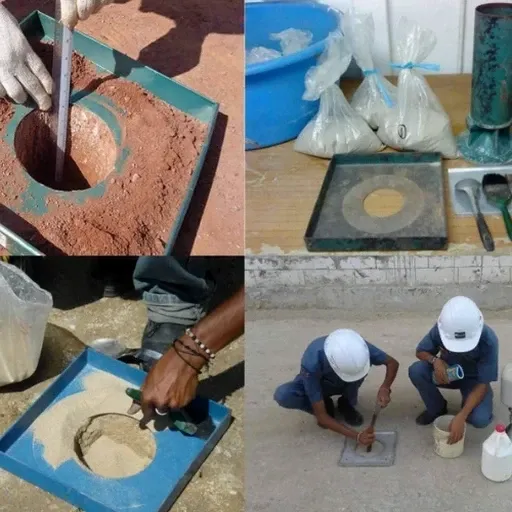
Soil Testing SuiteTriaxial (CIU/CID), direct shear, ring shear
Key InputPore pressure ratio (ru) from monitored piezometers
SoftwareSlide2, SLOPE/W, PLAXIS 2D (FEM verification)

Quick answers

What is the typical cost for a slope stability analysis for a single residential block in Adelaide?

For a standard residential lot requiring a cut or fill analysis, the fee typically ranges from AU$2,120 to AU$5,940. The final cost depends on the slope height, the number of boreholes needed, and the complexity of the laboratory testing program on the retrieved samples.

Do I really need a slope stability report if my block is almost flat?

If your block has a gradient of less than 5 degrees, you likely do not need a full stability report. However, if the site is within a regulated Hills Face Zone or near a creek bank with reactive clay, council will often mandate one regardless of the apparent gradient.

What is the difference between a static and a pseudo-static analysis?

A static analysis evaluates the slope under normal gravity and groundwater conditions. A pseudo-static analysis adds a horizontal force to simulate the inertial load from an earthquake, using a seismic coefficient defined in AS 1170.4. This is mandatory for slopes over 6 meters high in Adelaide.

How long does a typical slope stability analysis take?

A standard assessment takes between 3 and 4 weeks. This includes mobilizing a drill rig to the site, logging the core, performing triaxial and direct shear tests in our NATA lab, completing the limit-equilibrium modeling, and delivering the final signed report.

Location and service area

We serve projects in Adelaide and surrounding areas.

View larger map