Roadway engineering in Adelaide encompasses the comprehensive planning, analysis, design and construction of road pavements and subgrade foundations tailored to the region's unique conditions. This category covers everything from initial site investigation and material characterisation to the structural design of flexible and rigid pavements for highways, local streets and industrial access roads. The importance of robust roadway design in Adelaide cannot be overstated — the city’s expanding metropolitan footprint, coupled with its role as a freight and logistics hub, demands durable road infrastructure that can withstand increasing traffic loads while minimising long-term maintenance costs. A well-designed roadway not only ensures user safety and comfort but also protects the underlying subgrade from premature failure, making specialised geotechnical input essential from the earliest project stages.
Adelaide's geology presents distinct challenges and opportunities for roadway designers. Much of the metropolitan area is underlain by Quaternary alluvial sediments along the Adelaide Plains, with reactive clay soils prevalent in many suburbs. These expansive clays undergo significant volume changes with seasonal moisture fluctuations, posing a serious risk of pavement cracking and deformation if not properly addressed. To the east, the foothills of the Mount Lofty Ranges introduce weathered bedrock and colluvial deposits, where variable ground conditions demand careful site-specific analysis. Understanding the local soil reactivity, drainage characteristics and bearing capacity is fundamental to selecting appropriate pavement types and ensuring long-term performance. This is where a detailed CBR study for road design becomes invaluable, providing the empirical data needed to characterise subgrade strength under local conditions.
The regulatory framework governing roadway design in Australia is rigorous and directly applicable to all projects in South Australia. The primary standard is the Austroads Guide to Pavement Technology, particularly Part 2: Pavement Structural Design, which establishes the national methodology for both empirical and mechanistic pavement analysis. This is supplemented by the Department for Infrastructure and Transport (DIT) of South Australia’s own technical specifications and standard drawings, which adapt Austroads principles to local materials and climatic conditions. For projects involving new subdivisions or alterations to existing roads, compliance with the Local Government Association’s infrastructure design standards is also mandatory. These documents dictate everything from minimum pavement thicknesses and material properties to compaction requirements and surface tolerances, ensuring a consistent and safe road network across the state.
The types of projects that fall under the roadway category are diverse and demand tailored geotechnical solutions. Greenfield residential subdivisions in growth areas like Angle Vale or Mount Barker require full pavement designs for local access streets, often incorporating flexible pavement design with bituminous surfacing over granular bases to accommodate light to medium traffic. Major arterial road upgrades and highway rehabilitation projects, such as those along the North-South Corridor, frequently call for rigid pavement design using concrete slabs to deliver superior durability under heavy freight loading. Industrial estates, bus depots and container terminals present extreme loading scenarios where a deep understanding of soil-structure interaction is critical. Each project begins with a thorough geotechnical investigation to inform the pavement design, ensuring the chosen structural configuration is both economical and resilient against Adelaide’s reactive soils and variable rainfall patterns.
Flexible pavements typically consist of bituminous surface layers over granular base and subbase courses, distributing loads through particle-to-particle contact. They are generally more cost-effective for light to medium traffic and can tolerate minor subgrade movements. Rigid pavements use a concrete slab as the primary structural layer, which spreads loads over a wider area through beam action. This makes them ideal for heavy traffic corridors, industrial facilities and areas with poor subgrade conditions, offering longer service life with reduced maintenance despite higher initial material costs.
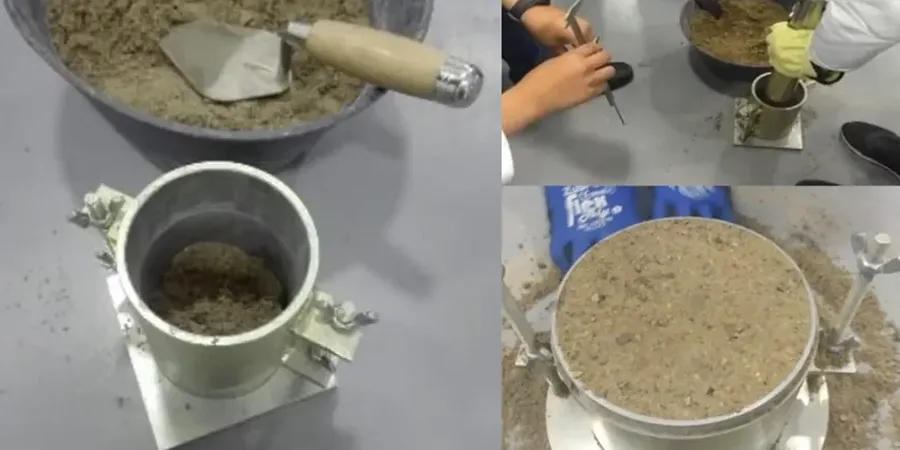
A California Bearing Ratio (CBR) study measures the shear strength and stiffness of the subgrade soil, which is the natural foundation for any pavement. In Adelaide, where reactive clays and alluvial soils are widespread, the CBR value can vary dramatically with moisture content. This test provides the essential empirical input for determining pavement thickness according to Austroads design charts. Without an accurate CBR assessment, a pavement risks being under-designed, leading to premature rutting and cracking, or over-designed, resulting in unnecessary construction expense.
The primary national framework is the Austroads Guide to Pavement Technology, particularly Part 2 for structural design. In South Australia, this is supplemented by the Department for Infrastructure and Transport (DIT) Master Specification and local standard drawings. For council-managed roads, the relevant Local Government Association infrastructure design standards also apply. These documents collectively define material specifications, design traffic loading calculations, compaction standards and minimum layer thicknesses, ensuring all roadway designs meet consistent safety and durability benchmarks across the state.
Adelaide's reactive clay soils swell when wet and shrink when dry, causing significant ground movement that can severely damage pavements. This seasonal volume change leads to longitudinal cracking, edge break-up and uneven surface profiles. To mitigate this, designs often incorporate deeper subgrade replacement, moisture-stabilised capping layers or the use of geotextile separators. In extreme cases, a rigid pavement may be specified to bridge over the active zone, or special construction sequencing may be required to seal the pavement before the subgrade undergoes detrimental moisture changes.