GEOTECHNICALENGINEERING1
ADELAIDE
HomeFoundationsRaft/mat foundation design

Raft Foundation Design in Adelaide: Stiffened Rafts for Reactive Clay Soils

Site investigations you can build on.

LEARN MORE

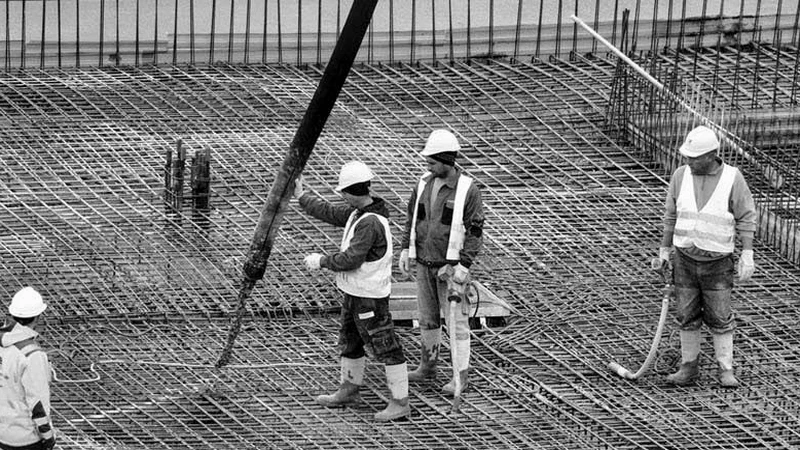
A two-storey residential development in the inner-south suburb of Unley ran into trouble when standard strip footings failed to meet the required edge heave parameters during a pre-pour inspection. The site sat on a pocket of moderately reactive Keswick Clay, and the only viable solution was a structural stiffened raft designed to AS 2870. Our laboratory ran Atterberg limits and shrink-swell index testing on Shelby tube samples to provide the site classification data the structural engineer needed. This is where raft/mat foundation design in Adelaide moves beyond generic slab detailing and into the realm of soil-structure interaction. We correlate borehole logs with laboratory consolidation curves so the raft geometry and beam depth reflect the actual moisture variation profile across the Adelaide Plains, whether the project sits on the Hallett Cove sandstone transition or the deep alluvium of the River Torrens corridor. When the geotechnical profile gets complicated, we often pair the investigation with triaxial testing to define the drained strength parameters for finite element modeling, or use in-situ permeability data to calibrate the long-term suction predictions under the slab.

In Adelaide, the difference between a Class M and Class H1-D site often comes down to 15 mm of predicted ground movement—something only a full shrink-swell test suite can resolve.
Our service areas

How we work

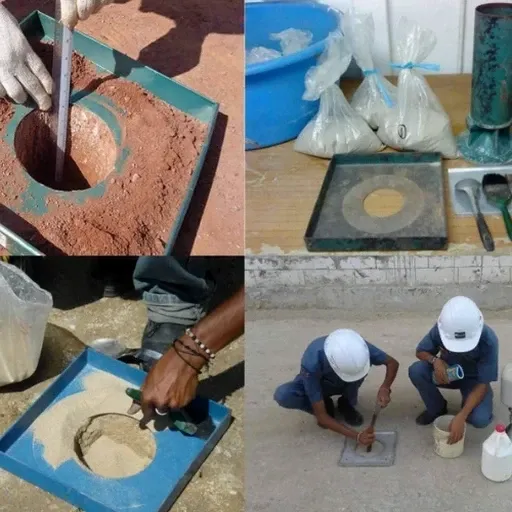
The core of a proper raft/mat foundation design investigation in Adelaide starts with hollow-stem auger drilling to depths of 3.0 to 5.0 m, depending on the depth to the natural water table and the influence depth of seasonal moisture change. We extract thin-walled tube samples at every 0.5 m interval and immediately seal them for moisture content preservation. In the lab, the samples go through a full shrink-swell suite: Atterberg limits to AS 1289, linear shrinkage, and the shrink-swell index (Iss) per AS 2870 Appendix B. The characteristic ground movement (ys) is then calculated using the Thornthwaite moisture index for the Adelaide metropolitan area. For larger commercial slabs—think distribution centers around Wingfield or Edinburgh Parks—we supplement the investigation with CPT testing to map the tip resistance and sleeve friction continuously, ensuring no soft lenses of the Hindmarsh Clay formation are missed between boreholes. The final deliverable includes a site classification (Class M, H1, H2, or E) and beam depth recommendations that comply with AS 2870-2011.
Raft Foundation Design in Adelaide: Stiffened Rafts for Reactive Clay Soils
Technical reference — Adelaide

Local geotechnical context

The most common mistake we see in Adelaide's northern growth corridors is a builder treating the entire subdivision as a uniform soil profile based on one preliminary desktop study. The Keswick Clay is notoriously variable; a site classified as Class M in one corner of the lot can shift to Class H1-D just 30 meters away if residual clay thickness changes. Without adequate borehole coverage—at least two boreholes for a single dwelling, more for complex footprints—the resulting raft/mat foundation design may underestimate edge heave moments. The consequence is slab doming within the first three years, cracking that propagates through internal partition walls, and a rectification cost that far exceeds the initial geotechnical budget. We have also seen cases where imported fill under the slab was not characterized properly, leading to differential movement between the cut and fill zones of the same raft. AS 2870 requires specific compaction and fill classification, and skipping this step voids any warranty on the slab performance.

Need a geotechnical assessment?

Reply within 24h.

Email: contact@geotechnicalengineering1.co

Relevant standards

AS 2870-2011 Residential Slabs and Footings, AS 1289.7.1.1 Soil Reactivity – Shrink-Swell Index, AS 1726-2017 Geotechnical Site Investigations, AS 3798-2007 Guidelines on Earthworks, AS 3600-2018 Concrete Structures

Typical values

ParameterTypical value
Site ClassificationAS 2870 Class A, S, M, H1, H2, E
Borehole Depth (Reactive Sites)3.0 – 5.0 m below ground level
Sampling MethodThin-walled tube, 50 mm diameter, push or hammer
Shrink-Swell Index (Iss)AS 2870 Appendix B / AS 1289.7.1.1
Characteristic Movement (ys)Calculated per AS 2870 Cl. 2.3
Raft Beam Depth (Typical H1-D)600 – 900 mm reinforced concrete
Edge Heave PredictionSuction change profile, Mitchell method
Report Turnaround10 – 15 business days from drilling

Quick answers

How much does a raft foundation site investigation cost in Adelaide?

For a standard residential site classification with two boreholes, shrink-swell testing, and an AS 2870 report, the investigation typically ranges from AU$1,570 to AU$7,030 depending on access, drilling depth, and the number of shrink-swell specimens required. Complex sites with deep fill or requiring CPT correlation fall at the upper end.

What's the difference between a stiffened raft and a waffle pod slab?

Both are raft systems under AS 2870, but a stiffened raft uses deeper perimeter and internal beams poured integrally with the slab, while a waffle pod slab uses polystyrene void formers between closely spaced ribs. Stiffened rafts are generally preferred on highly reactive Adelaide soils because they provide greater beam depth and stiffness against edge heave.

How many boreholes do I need for a raft foundation design?

AS 2870 requires a minimum of two boreholes for a single dwelling, but we recommend increasing coverage for lots larger than 500 m² or where the geology map indicates a transition between two formations. A general rule is one borehole per 200 m² of footprint, with a minimum depth of 3.0 m in reactive clay areas.

Can you design a raft on fill in Adelaide?

Yes, but AS 3798 requires the fill to be classified as controlled fill with documented compaction testing. We take representative samples of the imported material, run Proctor compaction and Atterberg limits, and certify the fill meets the required density ratio before the raft design proceeds. Uncontrolled fill would require removal or deep ground improvement.

What is the Thornthwaite moisture index for Adelaide?

Adelaide has a Thornthwaite moisture index (Im) of approximately -20 to -30 depending on the specific suburb and microclimate. This negative index indicates a net moisture deficit, which drives deep seasonal drying and increases the characteristic ground movement (ys) in reactive clay areas, particularly in the Adelaide Plains and the inner southern suburbs.

Location and service area

We serve projects in Adelaide and surrounding areas.

View larger map