GEOTECHNICALENGINEERING1
ADELAIDE
HomeUnderground ExcavationsGeotechnical analysis for soft soil tunnels

Geotechnical Analysis for Soft Soil Tunnels in Adelaide

Site investigations you can build on.

LEARN MORE

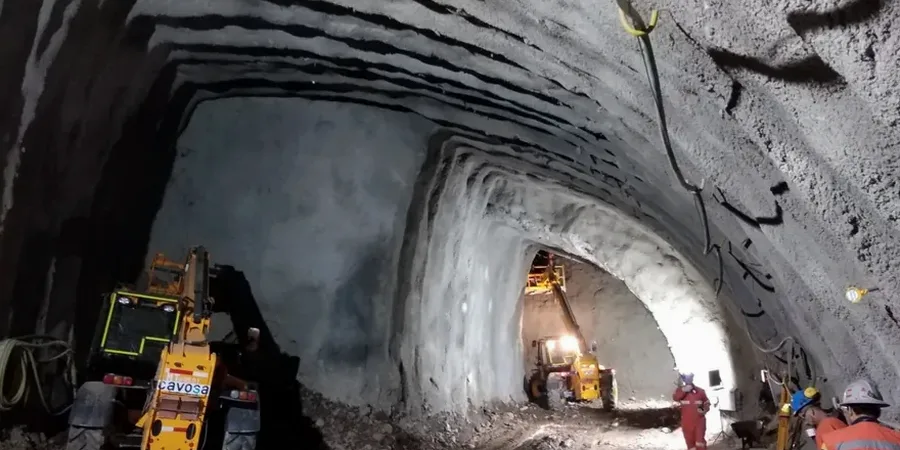
The coastal plain geology of Adelaide presents a unique set of challenges for tunnelling. Unlike the hard rock you find in the eastern states, much of the city’s subsurface is dominated by the stiff, highly reactive Hindmarsh Clay and saturated Quaternary alluvium along the River Torrens corridor. This means a standard tunnel design approach rarely works here—you need a soft ground tunnel analysis that accounts for low stand-up times, swelling pressures, and groundwater inflows before the first cut is made. Our team has been involved in ground characterisation for infrastructure projects across the Adelaide metropolitan area, from the southern suburbs near Hallett Cove to the inner-north renewal zones, where the Keswick Clay transitions into more variable alluvial deposits. Understanding how these materials behave under unloading is the difference between a controlled excavation and a costly collapse.

A Su of 25 kPa in the Adelaide alluvium means your tunnel face needs active support within hours—there is no room for conservative, slow excavation cycles.
Our service areas

How we work

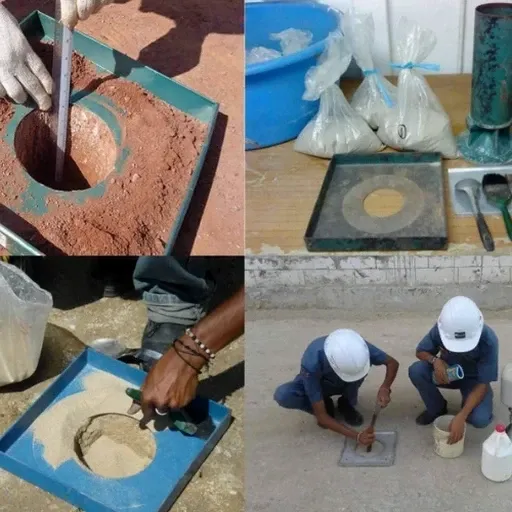
The Quaternary sediments beneath the Adelaide CBD can reach depths of over 30 metres, with the Pliocene sands and clays below adding another layer of complexity. Groundwater in the city area is often perched within the alluvial lens, sitting just a few metres below street level in places like Bowden and Thebarton. When we run a geotechnical analysis for a soft soil tunnel here, we focus heavily on the undrained shear strength profile—values as low as 25 kPa in the softer alluvial zones demand careful face support design and staged excavation sequences. Our lab testing programme pulls no punches: we run consolidated-undrained triaxial tests with pore pressure measurement, oedometer consolidation tests to nail down the compression index, and Atterberg limits to confirm the plasticity characteristics that drive squeezing behaviour. For larger diameter alignments, we often recommend complementing the borehole data with a CPT test campaign to get a near-continuous profile of tip resistance and sleeve friction—it is the fastest way to identify thin sand lenses that can turn a TBM drive into a nightmare.
Geotechnical Analysis for Soft Soil Tunnels in Adelaide
Technical reference — Adelaide

Local geotechnical context

Adelaide’s last significant seismic event was the 1954 magnitude 5.6 earthquake, and while the city sits away from major plate boundaries, AS 1170.4 still assigns a hazard factor that cannot be ignored in underground structures. A bigger risk in soft ground tunnelling here is not seismic shaking but consolidation settlement—when you dewater or depressurise the Pliocene sand layers, the overlying clays can settle differentially, threatening heritage buildings in the CBD and older infrastructure along King William Street. We have seen projects where insufficient slope stability analysis at portal entries led to surface slumping before the first ring was installed. The interaction between excavation-induced stress relief and the sensitive clay microstructure means you need a monitoring plan that tracks pore pressure dissipation, surface settlement markers, and in-tunnel convergence from day one.

Need a geotechnical assessment?

Reply within 24h.

Email: contact@geotechnicalengineering1.co

Relevant standards

AS 1726-2017: Geotechnical site investigations, AS 4678-2002: Earth-retaining structures (tunnel lining design), AS/NZS 1170.4:2007: Earthquake actions in Australia, AS 1289: Consolidated-undrained triaxial (reference standard)

Typical values

ParameterTypical value
Undrained shear strength (Su) in alluvium20–50 kPa
Plasticity index (PI) in Hindmarsh Clay30–55%
Overconsolidation ratio (OCR)2–6
Permeability of Pliocene sands1×10⁻⁵ to 1×10⁻⁴ m/s
Typical tunnel depth in Adelaide metro8–25 m
Swelling pressure in Keswick Clay150–350 kPa
Groundwater pH (aggressive potential)6.5–7.8

Quick answers

What are the typical ground conditions for tunnels in Adelaide?

The city's geology is dominated by the Hindmarsh and Keswick Clays, overlying Pliocene sands and Quaternary alluvium. The clays are stiff to hard but highly reactive, while the alluvial deposits near the River Torrens can be soft to firm with high groundwater. Undrained shear strengths in the alluvium often range from 20 to 50 kPa, which makes open-face tunnelling risky without pre-support.

How much does a soft ground tunnel geotechnical analysis cost in Adelaide?

The cost for a comprehensive analysis in Adelaide typically ranges from AU$6,330 to AU$26,020, depending on the number of boreholes, the depth of the alignment, and the complexity of the laboratory testing programme required. A TBM-driven tunnel with multiple cross-passages will naturally sit at the higher end of that range due to the volume of triaxial and consolidation testing involved.

Which Australian standards apply to soft soil tunnel analysis?

AS 1726 governs the site investigation methodology, AS 4678 provides the framework for tunnel lining and earth-retaining structure design, and AS/NZS 1170.4 covers seismic actions. We also frequently reference international standards like AS 1289 for triaxial testing when specific project specifications require it.

Location and service area

We serve projects in Adelaide and surrounding areas.

View larger map