GEOTECHNICALENGINEERING1
ADELAIDE
HomeSlopes & WallsRetaining wall design

Retaining Wall Design in Adelaide: Engineering for Reactive Soils and Slope Stability

Site investigations you can build on.

LEARN MORE

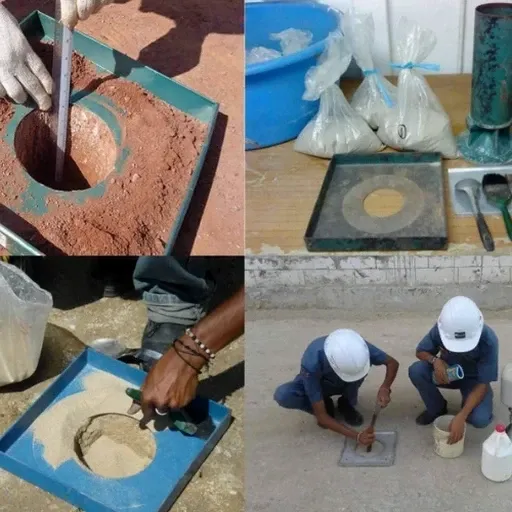
The survey equipment arrives in a reinforced trailer, carrying a dynamic cone penetrometer and a hand auger that cuts through Adelaide's dry crust like a can opener. It is not glamorous. But it tells us everything. We log the refusal depth, note the moisture profile, and collect jar samples of the dark grey Keswick Clay that defines so much of the Adelaide Plains. Retaining wall design here is a conversation with the soil, and the soil has a lot to say. A standard subdivision cut on a Flagstaff Hill slope carries lateral earth pressures that shift dramatically between February and July. The team has learned that no two Adelaide sites behave the same, which is why every retaining wall design starts with direct observation of the ground, not a generic table from a textbook. In the eastern suburbs near the foothills, a 1.2-metre wall can easily encounter fill over natural clay, creating a two-layer problem that requires careful drainage detailing and backfill specification to prevent long-term movement. Before finalising a wall section, we often verify the foundation bearing conditions with an SPT drilling program to confirm refusal depth and avoid surprises during excavation.

Adelaide's reactive clay soils can exert swelling pressures exceeding 200 kPa against a retaining wall if drainage fails, a condition we design to prevent from the start.

Our service areas

How we work

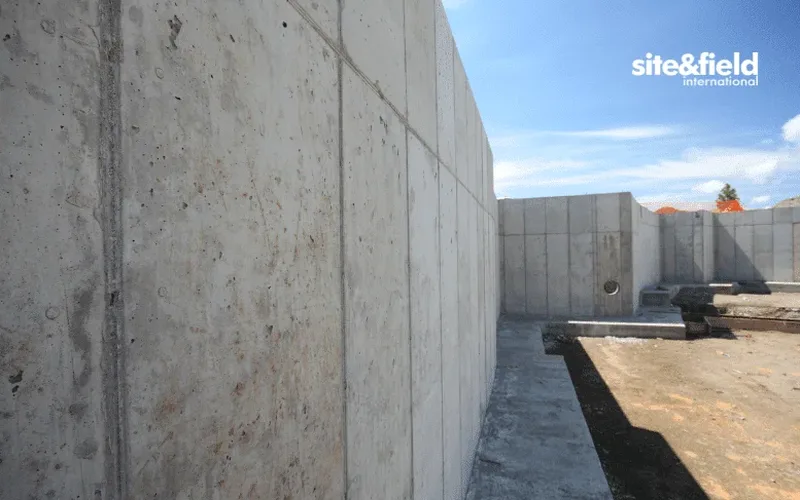
Adelaide's post-war expansion pushed suburbs like Burnside, Belair, and Tea Tree Gully into the Mount Lofty Ranges, carving building platforms into ancient, weathered siltstones. That history left a legacy of cut-and-fill terraces that now require retaining walls to hold back soils that have been disturbed for sixty or seventy years. The geological complexity is real: the Willunga Fault scarp runs south of the city, and the Eden-Burnside Fault zone cuts through the eastern suburbs, juxtaposing competent rock against deeply weathered profiles. Our retaining wall design approach for Adelaide sites integrates AS 4678:2002 requirements with a practical understanding of how local fill behaves over time. We specify free-draining granular backfill, geotextile separation layers, and subsoil drainage that directs water away from the wall heel, because blocked weep holes are one of the most common failure mechanisms we observe in older walls across the metropolitan area. For cantilever walls on sloping ground, we model the passive resistance wedge carefully, accounting for the reduced embedment that often occurs when the wall is positioned near an existing cut batter. The structural design covers bending moment and shear capacity checks on the stem, heel, and toe, with reinforcement detailing that meets AS 3600 concrete durability requirements for the local exposure classification, which in many Adelaide hills locations includes a moderate sulfate soil environment.
Retaining Wall Design in Adelaide: Engineering for Reactive Soils and Slope Stability
Technical reference — Adelaide

Local geotechnical context

Adelaide's Mediterranean climate, with its long dry summers and concentrated winter rainfall, creates a swing in soil moisture that tests every retaining wall built on reactive ground. From December to March, the clays shrink and crack, pulling away from the wall stem. Then comes a June downpour, and the same clay swells with enough force to tilt a poorly designed wall within a single wet season. The contrast is stark. The Adelaide Hills catch the orographic rainfall that the plains never see, while the coastal suburbs deal with saline groundwater that accelerates steel corrosion if the concrete cover is inadequate. We have observed walls in the Happy Valley and Aberfoyle Park area where surface runoff from uphill properties concentrated at the wall crest, saturating the backfill and generating hydrostatic pressures well beyond what the original design anticipated. Our retaining wall design process includes a drainage assessment that looks beyond the wall footprint, mapping the catchment area that contributes runoff during a 1-in-100-year storm event. Where the natural slope exceeds 1:4, we also evaluate global stability using limit equilibrium methods, because a retaining wall is only as stable as the slope it sits on.

Need a geotechnical assessment?

Reply within 24h.

Email: contact@geotechnicalengineering1.co

Relevant standards

AS 4678:2002 Earth-retaining structures, AS 1726:2017 Geotechnical site investigations, AS 3600:2018 Concrete structures, AS/NZS 1170.0:2002 Structural design actions – General principles, AS 2870:2011 Residential slabs and footings

Typical values

ParameterTypical value
Design standardAS 4678:2002 Earth-retaining structures
Loading codeAS/NZS 1170.0, 1170.1, 1170.2
Concrete designAS 3600 durability for exposure classification B1/B2
Backfill specificationFree-draining granular, φ ≥ 34°, compacted in 150 mm layers
Drainage systemPerforated subsoil drain at base, geotextile filter, weep holes at 2 m centres
Site investigationCPT, DCP, hand auger, or test pit per AS 1726
Soil reactivityClassified per AS 2870 site classification (M, H1, H2, E)

Quick answers

What does a retaining wall design for an Adelaide site typically cost?

Design fees for a residential retaining wall in Adelaide generally range from AU$1,380 to AU$5,510, depending on wall height, site access, and whether anchored or soil-nailed reinforcement is required. A straightforward cantilever wall under 1.5 m on a level site falls at the lower end, while a taller wall on a sloping block with difficult access and the need for geotechnical drilling will push toward the upper end of the range.

Do I need council approval for a retaining wall in Adelaide?

Most Adelaide councils require development approval for retaining walls over 1.0 m in height, or any wall that supports a surcharge from a building or driveway. Walls under 1.0 m may be exempt in some council areas, but if the wall is part of a larger building approval, it will be assessed as part of that application. We prepare the structural drawings and design certification that councils and private certifiers require.

How do you account for Adelaide's reactive clay soils in the design?

We classify the site reactivity per AS 2870 and measure the clay's shrink-swell potential through laboratory testing. The wall design then incorporates a flexible drainage system that maintains consistent moisture conditions in the backfill, reducing the risk of swelling pressure buildup. We also specify a minimum embedment depth that keeps the toe below the active zone of seasonal moisture fluctuation, which in Adelaide is typically 0.5 m to 1.0 m depending on clay content.

Location and service area

We serve projects in Adelaide and surrounding areas.

View larger map