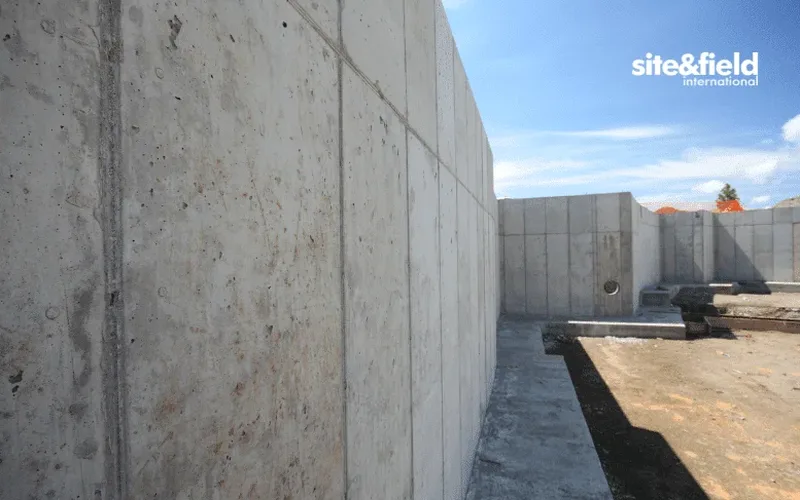
Slope and wall engineering in Adelaide addresses the design, stabilisation, and retention of soil and rock masses across a city uniquely shaped by its geological history. This category encompasses everything from the analysis of natural hillside stability to the construction of engineered retaining structures that make development possible on the city's undulating terrain. For engineers and developers, a deep understanding of local ground conditions is not just a technical requirement; it is a fundamental necessity for public safety and project viability, particularly as urban expansion pushes further into the Adelaide Hills and along the coastline.
The geotechnical character of Adelaide is dominated by the variably weathered Proterozoic and Cambrian rocks of the Mount Lofty Ranges, often blanketed by expansive clayey soils and colluvium. The well-known Keswick Clay and its equivalents present significant challenges due to their high reactivity and potential for shrink-swell movement, which can impose substantial lateral pressures on retaining walls. Furthermore, the natural slope processes in areas like the Eden-Burnside and Waterfall Gully fault zones create landscapes that are inherently susceptible to instability, making thorough site investigation the cornerstone of any slope-related project.
The regulatory framework governing this work is stringent and multi-layered. All designs must comply with the National Construction Code (NCC), which in turn references Australian Standards such as AS 4678 for earth-retaining structures and AS 5100.3 for bridge-associated walls. Crucially, local application is guided by the South Australia Planning, Development and Infrastructure Act 2016 and specific council requirements, often necessitating a detailed slope stability analysis report prepared by a chartered geotechnical engineer before any development approval is granted on sloping sites. These reports must rigorously demonstrate a factor of safety against collapse and serviceability loss under both static and seismic conditions.
The types of projects that demand this expertise are diverse. They range from the design of cantilever and anchored basement walls for multi-storey developments in the CBD, where deep excavations risk destabilising adjacent heritage structures, to major infrastructure corridors like the South Eastern Freeway, where rockfall protection and reinforced soil slopes are critical. Residential developments on hillside blocks commonly require bored pier or soldier pile walls, while coastal projects at Hallett Cove or Marino may integrate complex active/passive anchor design to resist both soil and wave loads, ensuring long-term durability in an aggressive marine environment.
The primary challenges stem from the region's reactive clay soils, particularly Keswick Clay, which undergo significant shrink-swell cycles, imposing variable loads on retaining walls. Additionally, the fractured rock masses of the Mount Lofty Ranges and colluvial deposits on steep slopes create inherent instability risks, requiring careful management of surface water and groundwater to prevent erosion and strength loss.
Retaining wall design is primarily governed by AS 4678-2002 for earth-retaining structures. For walls associated with bridges or major infrastructure, AS 5100.3 is applicable. These standards outline the requirements for limit state design, covering stability, structural integrity, and durability. Compliance with these standards, alongside the National Construction Code, is mandatory for regulatory approval.
A detailed slope stability analysis is typically mandated by local councils when a development is proposed on or near land with a gradient exceeding a certain threshold, often 15-20%, or within a mapped landslide susceptibility zone. The analysis must demonstrate an adequate factor of safety for both the existing and proposed conditions, considering long-term groundwater effects and seismic loading.
The design life for a permanent engineered retaining wall is generally specified as 60 years in accordance with AS 4678. Achieving this requires rigorous durability design, especially for structures in aggressive coastal environments or in contact with reactive soils. This involves specifying appropriate concrete grades, cover to reinforcement, and corrosion protection systems for steel elements like ground anchors.