GEOTECHNICALENGINEERING1
ADELAIDE
HomeGround improvementStone column design

Stone Column Design for Adelaide Ground Conditions

Site investigations you can build on.

LEARN MORE

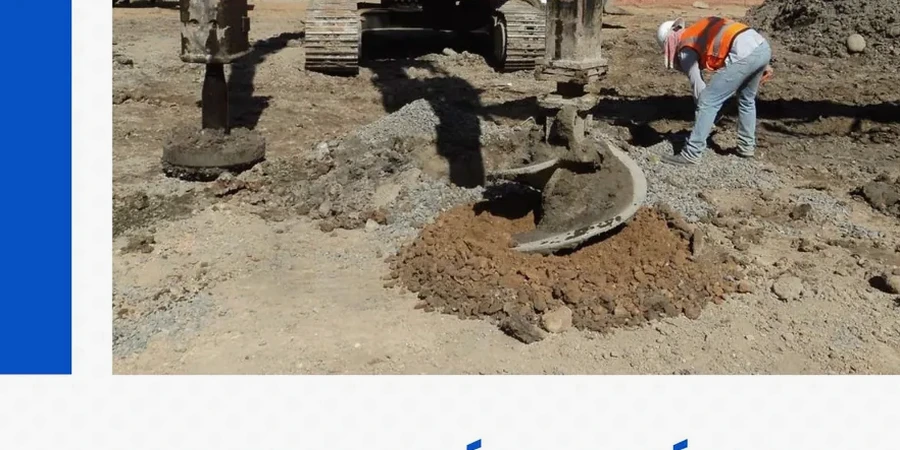
Adelaide sits at roughly 50 metres above sea level, but what really matters for foundation work is the 30 metres of soft alluvial clay and silts laid down by the River Torrens across the western suburbs and the CBD fringe. In 1954 a magnitude 5.6 earthquake rattled the city, a reminder that even moderate seismic events demand ground treatment that resists both settlement and lateral displacement. Stone column design steps into that gap. The approach uses compacted gravel columns installed by vibro-displacement or vibro-replacement to stiffen the ground, speed up drainage, and cut differential settlement under structural loads. For projects on the Keswick Clay or in areas with uncontrolled fill from old brick pits, a dense grid of stone columns transforms the ground into a composite mass that behaves predictably. It is not a one-size-fits-all fix, though; column diameter, spacing, and depth must be calibrated to the actual stratigraphy. On sites where the clay runs deeper than 15 metres, we often combine stone columns with a pre-loading strategy monitored with in-situ permeability tests to confirm consolidation rates match the design assumptions.

A well-designed stone column grid turns soft Adelaide clay into a composite ground mass that drains, stiffens, and resists seismic settlement in one operation.
Our service areas

How we work

AS 4678 governs earth-retaining structures, but for stone columns the design also pulls heavily from the vibro-compaction guidelines and the bearing capacity principles in AS 5100.3 when dealing with approach embankments. In Adelaide, the interplay between the dry summer crust and the saturated winter clay creates a shrink-swell cycle that wrecks untreated footings; stone columns interrupt that cycle by creating stiff, free-draining inclusions. A typical design sequence starts with CPT or SPT data — we often run a CPT test grid at 15-metre spacing to map the soft zones — then models the composite shear strength using Priebe's method or finite element analysis. Column diameters usually range from 600 to 900 mm, installed on a triangular grid of 1.5 to 2.5 metres depending on the area replacement ratio. Backfill is clean, hard gravel graded between 25 and 75 mm, compacted in lifts. The design must also check against the liquefaction potential of loose sandy lenses within the Hindmarsh Clay; stone columns act as drains that limit pore pressure build-up, a mechanism validated by Seed and Booker's 1977 dissipation model. For sites adjacent to the Torrens Linear Park, we add a slope stability assessment because column installation can temporarily reduce lateral confinement near the bank.
Stone Column Design for Adelaide Ground Conditions
Technical reference — Adelaide

Local geotechnical context

A common mistake on Adelaide brownfield sites is treating stone columns as a simple soil replacement and skipping the pre-treatment CPT grid. Without that, contractors hit buried concrete, old brick pits, or highly variable fill and the columns end up with inconsistent density and diameter. The result is differential settlement that shows up within two years as cracked slabs and misaligned door frames. Another frequent error is designing for static load only and ignoring the drainage function during a seismic event; AS/NZS 1170.4 imposes a site-specific hazard spectrum, and loose sandy layers in the Quaternary alluvium can liquefy if the columns are too widely spaced to relieve pore pressure quickly. Fixing a failed stone column installation is expensive — it usually means excavation and partial re-installation under a live structure. A design backed by MASW and seismic refraction surveys upfront catches the shear-wave velocity contrast between the crust and the soft layer, letting the engineer set column length precisely where the stiff stratum begins.

Need a geotechnical assessment?

Reply within 24h.

Email: contact@geotechnicalengineering1.co

Relevant standards

AS 4678: Earth-retaining structures, AS 1726: Geotechnical site investigations, AS/NZS 1170.4: Earthquake actions in Australia, AS 5100.3: Bridge design – Foundations, Seed & Booker (1977) – dissipation of excess pore pressure

Typical values

ParameterTypical value
Column diameter (typical)600 – 900 mm
Installation gridTriangular, 1.5 – 2.5 m spacing
Area replacement ratio10 – 35 %
Backfill specificationClean hard gravel, 25 – 75 mm
Depth of treatment5 – 20 m (project-dependent)
Design methodPriebe, FE modelling, Seed & Booker
Drainage functionRadial drainage, pore pressure control
Quality controlLoad tests, CPT verification per AS 1726

Quick answers

How much does stone column design and installation cost for a typical Adelaide residential slab?

For a standard residential lot on soft clay in suburbs like Thebarton or Bowden, design plus installation usually falls between AU$2,330 and AU$9,040 depending on treatment depth, column count, and access constraints. That range covers the site investigation, design package, and QA oversight; the vibro rig and aggregate supply are separate contractor costs.

How deep do stone columns need to go in Adelaide's western suburbs?

It depends entirely on the depth to competent bearing strata. In the western suburbs, the Quaternary alluvium often extends 15 to 20 metres before hitting the Hallett Cove Sandstone or older Pleistocene clays. We set column tips at least 0.5 metres into the stiff layer, confirmed by CPT refusal, so a 16 to 18-metre column is common.

Can stone columns prevent liquefaction in sandy lenses under the Adelaide CBD?

Yes, that is one of their primary functions in mixed alluvial profiles. The columns act as high-permeability drains that limit excess pore pressure during cyclic loading. Seed and Booker's radial consolidation model is the standard design check; column spacing is tightened to 1.5–1.8 metres if the fines content of the sand is below 15 percent.

What is the difference between vibro-displacement and vibro-replacement stone columns?

Vibro-displacement pushes the ground sideways with a poker and feeds stone from the top; it works best in silts and loose sands. Vibro-replacement removes soil through the probe and replaces it with compacted stone; we use it in softer clays and fills where lateral displacement would lift adjacent structures. In Adelaide, both methods appear depending on the sensitivity of nearby footings.

Location and service area

We serve projects in Adelaide and surrounding areas.

View larger map