GEOTECHNICALENGINEERING1
ADELAIDE
HomeInvestigationSPT (Standard Penetration Test)

Standard Penetration Testing (SPT) in Adelaide: Reliable Soil Data

Site investigations you can build on.

LEARN MORE

The soil profile changes significantly between Adelaide's suburbs. Build in Prospect and you are likely hitting stiff Hindmarsh Clay within a few metres. Move south to Morphettville and the sands of the former swamp deposits dominate. A Standard Penetration Test (SPT) quantifies these differences directly. The test records the blow count (N-value) required to drive a split-spoon sampler 300 mm into the ground. That number tells the geotechnical engineer everything about relative density and consistency. On the alluvial plains of the River Torrens, where soft clays and loose silts are common, SPT data becomes critical for settlement analysis. The method is straightforward, cost-effective, and when executed to AS 1726, provides defensible parameters for shallow and deep foundations. We often pair the SPT with triaxial testing on undisturbed samples from cohesive layers to get both strength and stiffness for advanced numerical models.

An SPT N-value of less than 4 in saturated silty sand near the Port River estuary demands an immediate liquefaction screening before any foundation design proceeds.
Our service areas

How we work

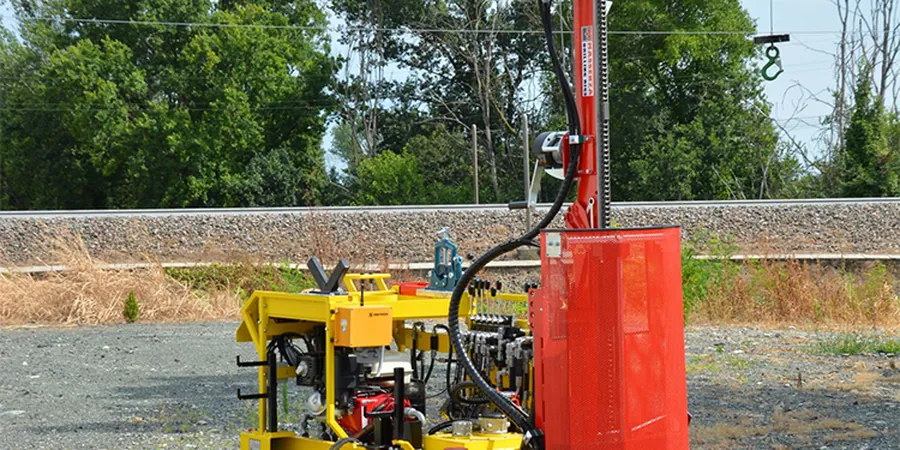
On the slopes of the Adelaide Hills, we frequently see highly variable residual silts over weathered siltstone. An SPT alone can be misleading here if you do not log the cuttings carefully. The split-spoon sample lets the driller inspect the material in the shoe, checking for slickensided surfaces that indicate prior slope movement. A standard rig mounted on a tracked carrier can access tight hillside blocks. The test advances at 1.5 m intervals or at every stratum change. In the clayey sands of the Golden Grove area, SPT refusal often occurs on the Cambrian basement rock. The data feeds directly into bearing capacity equations and liquefaction assessments following the Seed-Idriss simplified procedure. For sites with high gravel content, the energy transfer ratio must be corrected. We correlate the N-values with CPT testing data when the project demands continuous profiling, particularly in the saturated sands near West Lakes where pore pressure dissipation is a concern.
Standard Penetration Testing (SPT) in Adelaide: Reliable Soil Data
Technical reference — Adelaide

Local geotechnical context

The rig is a diesel-hammer track-mounted unit, compact enough for residential blocks in North Adelaide but powerful enough to punch through the calcrete layers common in the northern suburbs. The hammer lifts and drops 63.5 kg over 760 mm. That repetitive impact is the only way to get a reliable N-value through the stiff Keswick Clay. But skipping the SPT on a site with uncontrolled fill is a mistake. Old quarries backfilled with rubble exist across the Mitcham and Burnside council areas. The split-spoon sampler jams or returns zero recovery in these zones, a clear red flag that hand-auger observations would miss. We identify the fill thickness and underlying natural ground. The SPT also reveals perched water tables on hillside sites, which can destabilise cut batters. Without this penetration data, you are designing blind.

Need a geotechnical assessment?

Reply within 24h.

Email: contact@geotechnicalengineering1.co

Relevant standards

AS 1726-2017, AS 4678-2002, AS/NZS 1170.0:2002, AS 1289

Typical values

ParameterTypical value
Standard complianceAS 1726-2017 (Geotechnical Site Investigations)
Hammer typeAutomatic trip hammer (safety hammer) with energy calibration
SamplerStandard split-spoon (50 mm O.D., 35 mm I.D.)
Test interval1.5 m depth intervals or at material change
Depth capacityUp to 30 m in unconsolidated sediments, refusal on rock
Data outputN-values, soil descriptions, groundwater observations, sample recovery
GroundwaterStandpipe or vibrating wire piezometer installation on request

Quick answers

What does an SPT cost for a residential site in Adelaide?

For a standard residential investigation with a track-mounted rig, typically involving 2 to 3 boreholes to 5 m depth, the cost ranges from AU$960 to AU$1,320. The final figure depends on access constraints, traffic management requirements in suburbs like Unley, and the number of tests per hole.

How long does an SPT investigation take on site?

A two-person crew can complete two 5-metre boreholes in a single day, assuming reasonable access and no mechanical refusal on shallow rock. Drilling through the dense Quaternary alluvium north of the city may slow progress slightly.

Can SPT data be used for footing design directly?

Yes, the N-values correlate directly to allowable bearing pressure for strip and pad footings in the local soil types. For reactive clays, the data is combined with Atterberg limits to assess shrink-swell potential per AS 2870.

Location and service area

We serve projects in Adelaide and surrounding areas.

View larger map