GEOTECHNICALENGINEERING1
ADELAIDE
HomeIn-Situ TestingField density test (sand cone method)

Field Density Testing Adelaide – Sand Cone Method

Site investigations you can build on.

LEARN MORE

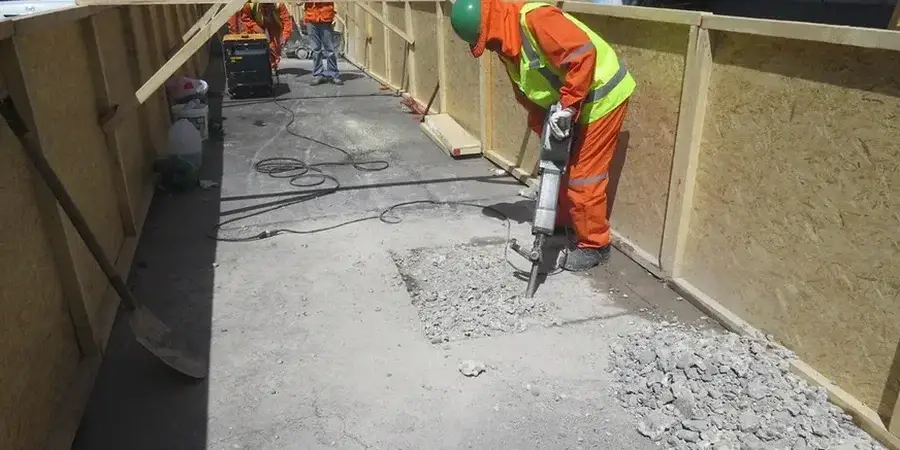
Adelaide's subsurface is a patchwork of Quaternary alluvium, Hindmarsh Clay, and weathered meta-sediments of the Adelaide Superbasin. Getting compaction right here is not a formality. The sand cone test gives us a direct, physical verification of in-place density. We run it on road subgrades in the northern suburbs, on structural fill in Tonsley, and on trench backfill through the clay belts. The method works regardless of aggregate size. In-situ permeability matters when backfill doubles as a drainage layer, and proctor tests define the reference density we measure against. Our team brings the calibrated equipment to your site and delivers results the same day.

A density reading without a valid reference proctor is just a number. We tie every sand cone result to its specific compaction curve.
Our service areas

How we work

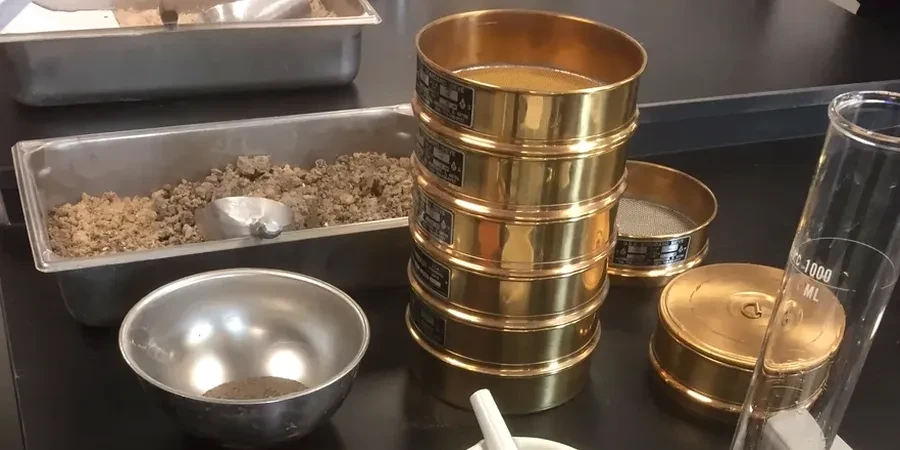
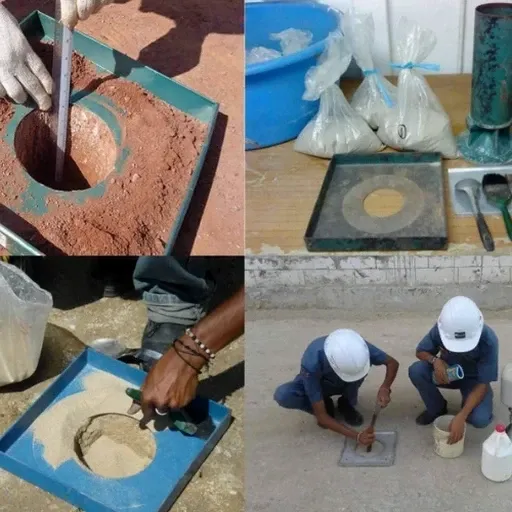
The test procedure follows AS 1289.5.3.1 in full. We excavate a clean hole, remove and weigh all the material, then fill the void with calibrated sand of known density. The dry density is calculated directly from mass and volume. Adelaide's coarse-grained fills, often sourced from local quarries at Penrice or Stonyfell, can be tricky. Particle size matters. We switch to larger sand cone kits when the maximum particle size exceeds 37.5 mm. A companion grain-size analysis confirms the grading and justifies kit selection. Where fill contains oversize rock fragments, we apply the rock correction method from the standard. Every result is referenced to a modified or standard compaction curve. No assumptions. Just measured values.
Field Density Testing Adelaide – Sand Cone Method
Technical reference — Adelaide

Local geotechnical context

Adelaide sits at roughly 50 m elevation on the plains, but the eastern foothills rise fast. Cut-to-fill transitions are common. Differential settlement risk is real. A compaction test that passes at one spot says nothing about the lift 20 metres away. We see this on Hills Face Zone projects where fill is placed over steep, weathered basement rock. The sand cone method gives a point measurement. Testing frequency must match the risk. For large earthworks pads, we recommend a grid pattern tied to lift thickness. For narrow trench backfill, the spacing tightens. Skipping tests on the upper lifts is a mistake. The deepest fill layers carry the load, but the upper lifts are where compaction is hardest to achieve.

Need a geotechnical assessment?

Reply within 24h.

Email: contact@geotechnicalengineering1.co

Relevant standards

AS 1289.5.3.1 – Soil compaction and density tests: Determination of the field density of a soil – Sand replacement method, AS 3798 – Guidelines on earthworks for commercial and residential developments, AS 1289.5.2.1 – Dry density/moisture content relation (modified compaction)

Typical values

ParameterTypical value
Test standardAS 1289.5.3.1 (sand cone)
Test depth range0 – 300 mm typical; deeper with stepped excavation
Min. hole volume≈ 700 cm³ for fine-grained; larger for coarse fills
Calibrated sandOttawa-type, uniform gradation, bulk density checked daily
Max. particle size (standard kit)37.5 mm
Typical field turnaround2 – 4 hours for same-day reporting
ApplicationsRoad subgrade, structural fill, trench backfill, embankments

Quick answers

How much does a field density test cost in Adelaide?

A single sand cone test typically runs between AU$180 and AU$240, depending on site location and the number of tests booked in one mobilization. Reduced rates apply for bulk programs.

When should I use the sand cone method instead of a nuclear gauge?

The sand cone method is the reference test. Use it when nuclear gauge results need independent verification, when the soil contains materials that interfere with nuclear measurement (high iron content, slag, or coarse aggregate), or when the specification explicitly requires AS 1289.5.3.1.

How long does a single sand cone test take on site?

About 20 to 30 minutes per test point. This covers excavation, material collection, sand pouring, and backfilling the hole. Reporting follows within a few hours.

What moisture condition is needed for the test?

The sand must be dry and free-flowing. We calibrate the sand bulk density daily and protect stock from moisture on site. Wet sand invalidates the test. The soil being tested can be at any moisture content; we take a separate sample for moisture determination.

Location and service area

We serve projects in Adelaide and surrounding areas.

View larger map