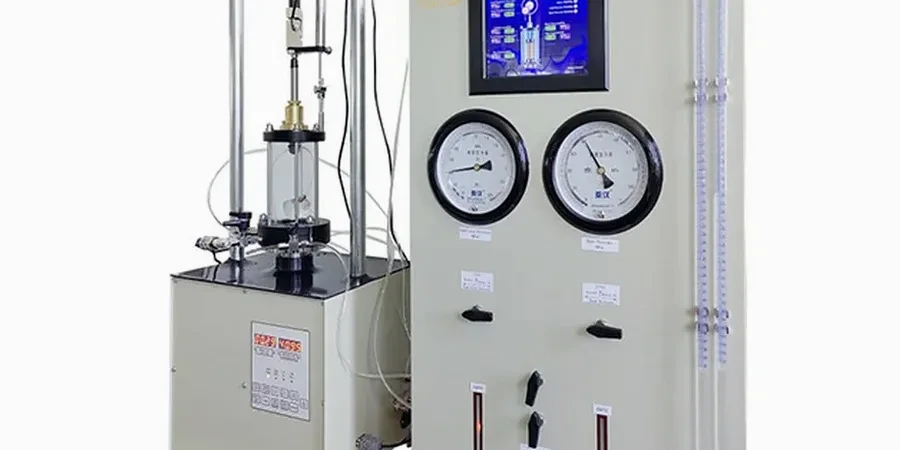
Geotechnical laboratory testing forms the analytical backbone of every safe and durable construction project in Adelaide. This category encompasses the physical assessment of soil and rock specimens retrieved from boreholes, test pits, or sampling tubes, translating raw field data into quantifiable engineering parameters. In a city where reactive clays, alluvial deposits, and variable fill materials coexist within short distances, laboratory analysis is not merely a compliance step—it is an essential risk management tool. Understanding the precise behaviour of the ground beneath a site allows engineers to design foundations that resist settlement, pavements that withstand cracking, and retaining structures that remain stable throughout their service life. From simple classification tests to advanced strength and consolidation procedures, Adelaide’s construction industry relies on accurate laboratory data to navigate the challenges posed by the local stratigraphy.
The geology of the Adelaide Plains and surrounding foothills presents a unique set of conditions that demand rigorous laboratory investigation. Much of the metropolitan area is underlain by the Hindmarsh Clay and Quaternary alluvial sediments, which are notorious for their shrink-swell reactivity and variable consistency. The presence of the Keswick Clay and other estuarine deposits introduces soft, compressible layers that challenge shallow foundation design. Further east, the foothills of the Mount Lofty Ranges expose residual soils derived from weathered Precambrian basement rocks, where the transition from soil to rock can be gradual and deceptive. A Atterberg limits test becomes indispensable here, quantifying the plasticity index of these fine-grained soils and directly correlating to their volume change potential—a critical factor for slab-on-ground construction in Adelaide’s dry summers and wet winters.
Australian testing protocols, anchored by the AS 1289 series (Methods of testing soils for engineering purposes), dictate the methodologies used in any NATA-accredited Adelaide laboratory. These standards ensure consistency and repeatability, whether a technician is performing a simple moisture content determination or a complex multi-stage triaxial test. For instance, AS 1289.6.1.1 governs the unconsolidated undrained triaxial compression test, providing undrained shear strength parameters for short-term stability analysis in saturated clays. Complementing this, AS 1289.3.6.1 specifies the standard method for particle size distribution using sieve analysis, while the hydrometer method extends this range into the silt and clay fractions. A comprehensive grain size analysis (sieve + hydrometer) is fundamental for assessing drainage characteristics and frost susceptibility, even in Adelaide’s temperate climate, and is routinely specified for road base materials and filter design.
The types of projects that trigger a comprehensive laboratory campaign are diverse and span Adelaide’s expanding infrastructure and residential sectors. Multi-storey developments in the CBD require deep boreholes and advanced strength testing, where effective stress parameters from a consolidated drained triaxial test inform excavation support and deep foundation design. Greenfield residential subdivisions across the northern growth corridor, such as those in Playford and Gawler, depend on soil reactivity classifications derived from Atterberg limits and shrink-swell index testing to determine appropriate footing systems. Linear infrastructure projects, including the North-South Corridor upgrades, generate thousands of samples for compaction control and California Bearing Ratio assessment. Even smaller-scale residential extensions on sloping blocks in the eastern suburbs benefit from a targeted laboratory program to confirm bearing capacity and identify any fill materials of unknown origin.
Turnaround times vary depending on the test complexity and current laboratory workload. Simple classification tests like moisture content and Atterberg limits can often be completed within 3–5 working days. However, tests requiring longer curing or consolidation phases, such as triaxial shear strength or one-dimensional consolidation, typically require 7–14 working days. Expedited testing schedules are usually available for critical project deadlines upon request.
Undisturbed samples, such as those in thin-walled tubes for triaxial or consolidation testing, must be sealed immediately to preserve in-situ moisture content, stored upright, and protected from vibration and temperature extremes during transit. Disturbed samples for classification tests should be placed in heavy-duty plastic bags and clearly labelled. All samples must be accompanied by a chain-of-custody form and delivered promptly to minimise moisture loss, in accordance with AS 1289.1.2.1 guidelines on sampling and preparation.
For results to be accepted by regulatory authorities and certifying engineers, the laboratory must hold NATA (National Association of Testing Authorities) accreditation for the specific tests being performed. This accreditation confirms that the facility operates a quality management system complying with ISO/IEC 17025 and that its technicians demonstrate competence in the relevant AS 1289 methods. Most commercial and infrastructure contracts in South Australia explicitly require NATA-endorsed reports for all geotechnical testing.
Laboratory testing determines the soil's reactivity classification by measuring the characteristic surface movement (ys) through shrink-swell index tests. The Atterberg limits, particularly the liquid limit and plasticity index, correlate with the soil's volume change potential. These parameters are used in accordance with AS 2870 to classify the site (e.g., Class M, H1, or H2) and prescribe the appropriate footing system, such as stiffened raft slabs or deep screw piles, to mitigate damage from seasonal ground movement.