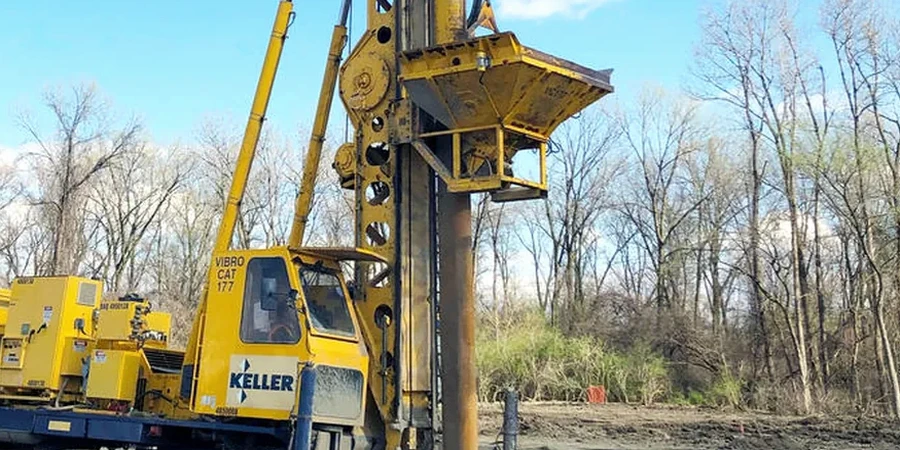
Adelaide’s western suburbs sit on deep Quaternary dune sands that can settle under vibratory loads, while the eastern foothills hide stiff clays over weathered rock. That contrast—loose sand needing densification against competent ground—shapes every vibrocompaction design we produce. We base layouts on cone resistance from a CPT test to pinpoint loose zones, and adjust grid spacing when the target depth exceeds 10 m. For mixed profiles near the River Torrens, we often couple the design with stone columns where fines content climbs above 15 % and vibro alone loses efficiency. Our work in the Adelaide Park Lands and Port Adelaide confirms that a single method rarely fits the whole site.
A 2.8 m triangular grid with 130 kW vibrator can lift CPT tip resistance from 4 MPa to over 15 MPa in a single pass through Adelaide's dune sand.