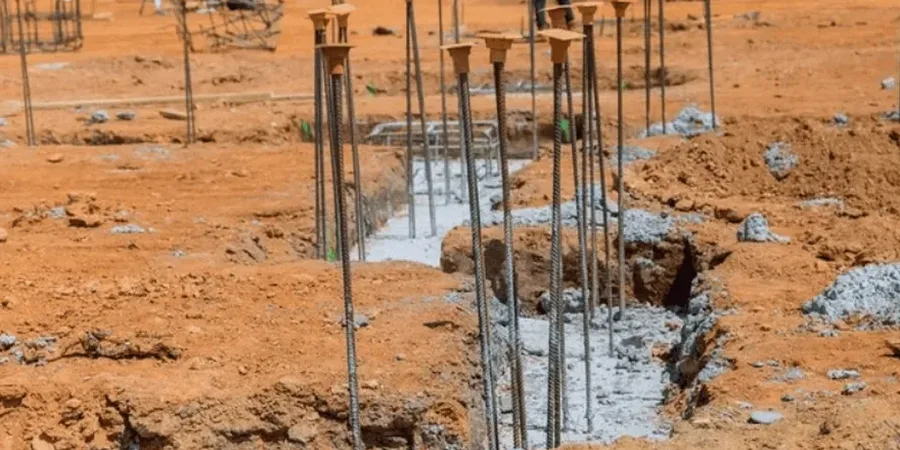
In Adelaide, the design and construction of foundations is a critical first step in any building project, directly influencing structural integrity and longevity. This category encompasses the engineering principles and practices required to safely transfer structural loads to the ground. Given the city's varied and often challenging subsurface conditions, a deep understanding of local geology is not just an advantage but an absolute necessity. Our comprehensive approach covers everything from initial site investigation to detailed design, ensuring that every structure, from a modest home to a multi-storey commercial complex, rests on a reliable and durable base. The process integrates geotechnical analysis with structural design, adhering strictly to national standards to mitigate risks like differential settlement, soil reactivity, and slope instability.
Adelaide's geological profile is famously complex, dominated by reactive clay soils, particularly in the northern and western suburbs, which are prone to significant shrink-swell movements with seasonal moisture changes. The foothills and southern areas present challenges with shallow bedrock, colluvial deposits, and fill materials, while coastal regions involve calcareous sands and potential for soft, compressible strata. This variability demands a tailored foundation strategy for virtually every site. For instance, a standard footing that performs well on stable Torrens River alluvium could be disastrous on a reactive clay site in Golden Grove. Understanding these specific ground conditions, as outlined in the local Geotechnical Baseline Reports, is the cornerstone of our design philosophy, ensuring solutions are engineered to accommodate the unique soil-structure interaction at your particular location.
The design and execution of all foundation works in Australia are governed by the National Construction Code (NCC) and, most critically, the Australian Standard AS 2870-2011 'Residential slabs and footings'. This standard provides the classification system for sites based on soil reactivity and dictates the deemed-to-comply designs for common residential footings. For larger or more complex projects not covered by AS 2870, the design falls under AS 2159-2009 'Piling – Design and installation' for deep foundations and general geotechnical principles outlined in AS 4678-2002 for earth-retaining structures. Compliance with these standards is mandatory for building approval in South Australia, and our designs are rigorously prepared to meet these requirements, providing documentation suitable for council submission and construction by licensed practitioners.
The types of projects requiring specialist foundation design in Adelaide are diverse. Residential developments on reactive sites commonly require engineered shallow foundation design, specifically stiffened raft slabs or deep edge beams integrated with the footing system. Multi-storey buildings, infrastructure projects, and structures on soft or filled ground often necessitate deep foundations, driving the need for expert pile foundation design, including bored piers and driven piles that transfer loads to more competent strata at depth. For large commercial or industrial structures, particularly those with heavy floor loadings or on very poor ground, a raft/mat foundation design provides a robust solution by creating a monolithic concrete slab that floats on the ground, spreading the load and bridging soft spots. Each solution is a direct response to the specific structural demands and the site's geotechnical narrative.
Adelaide's geology is highly variable, with reactive clays, sands, and shallow bedrock often present within the same suburb. A site-specific investigation per AS 2870-2011 classifies the soil reactivity and identifies deep-seated issues like uncontrolled fill or soft layers. Without this data, a standard design is a gamble that can lead to severe cracking and structural damage due to differential ground movement, making it a non-negotiable first step.
The primary standard is AS 2870-2011 'Residential slabs and footings'. It provides a site classification system based on soil reactivity (e.g., Class M, H1, E) and prescribes deemed-to-comply designs for stiffened rafts, waffle pods, and strip footings. For engineered designs outside these standard solutions, the standard still sets the performance criteria for limiting differential deflection and foundation movement.
The decision is driven by the geotechnical report and structural loads. Deep pile foundations are required when stable bearing strata are too deep for shallow footings, often due to thick layers of soft clay, loose sand, or uncontrolled fill. They are also necessary for high-rise buildings or when adjacent structures require excavation support, bypassing the problematic surface soils entirely.
The primary risk is differential foundation movement, known as 'clay heave' in wet seasons and shrinkage in dry periods. This causes significant structural distress, including cracked brickwork, jamming doors and windows, and damaged rigid services like plumbing. Rectification is extremely costly and disruptive, often requiring underpinning, which reinforces why a compliant, site-specific design is a crucial investment.