GEOTECHNICALENGINEERING1
ADELAIDE
HomeLaboratoryLaboratory CBR test

Laboratory CBR Testing for Pavement Design in Adelaide

Site investigations you can build on.

LEARN MORE

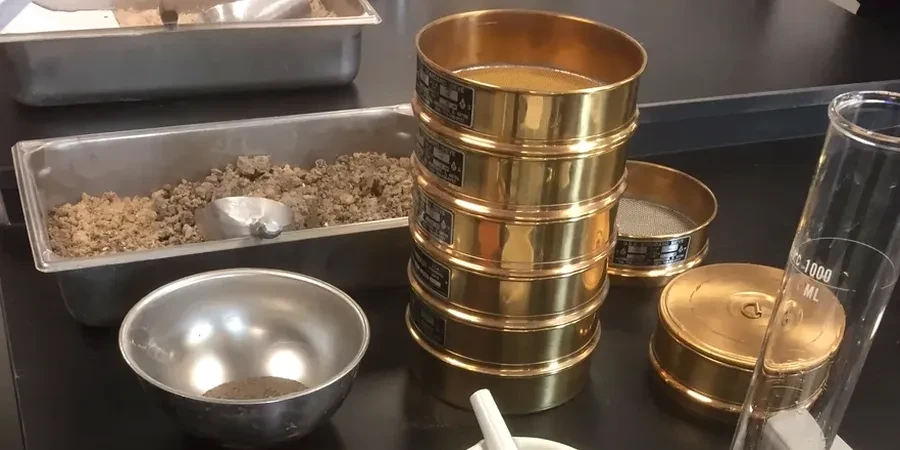
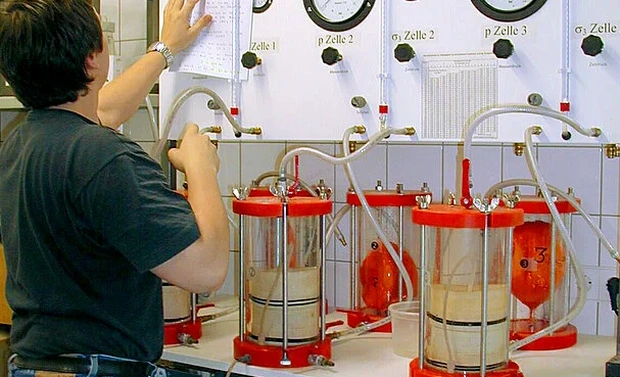
We still see projects where the pavement design relies on assumed CBR values from a desktop study, only to find the Adelaide subgrade turns to jelly after the first winter rains. The cost of a full-depth reconstruction dwarfs the investment in a proper laboratory CBR test. Our lab processes undisturbed and remoulded specimens under AS 1289.6.1.1, with four-day soak cycles that replicate the wetting-up of the reactive clays common across the Adelaide Plains. Pairing the CBR with a grain size analysis reveals whether the fines content will pump water into the basecourse, while Atterberg limits flag the high-plasticity Keswick and Hindmarsh clays before they surprise you during earthworks.

A soaked CBR below 3% in Adelaide's western alluvium can double the required pavement thickness overnight.
Our service areas

How we work

Adelaide's post-war expansion pushed residential subdivisions straight onto the Quaternary alluvium of the River Torrens and its tributaries, where soft silty clays alternate with lenses of poorly graded sand. Early road failures along South Road and Portrush Road taught the local councils that standard empirical designs from the eastern states did not transfer well. Today a soaked CBR value below 3% is not uncommon in the western suburbs, forcing designers into lime stabilisation or a thicker granular capping layer. The laboratory CBR test gives you that number before the grader moves onsite. We run paired specimens from the same Shelby tube so you can compare the immediate bearing response against the soaked condition, and we report the swell percentage observed during the four-day soak, which often dictates the final pavement cross-section more than the CBR figure itself.
Laboratory CBR Testing for Pavement Design in Adelaide
Technical reference — Adelaide

Local geotechnical context

AS 1289.6.1.1 mandates a strict moisture conditioning regime, and skipping the soak phase on a reactive clay site in Adelaide is a direct breach of the standard. The city's Mediterranean climate produces a pronounced wet-dry cycle: subgrades that test at 15% CBR in February can collapse to 2% CBR by July. We have seen local government specifications reject tender submissions outright when the laboratory CBR report did not include swell data alongside the penetration curve. The risk compounds on arterial roads where traffic loadings exceed 10^7 ESA over the design life. An underspecified pavement built on an unsoaked CBR assumption will rut within the first two years, triggering contractual disputes and expensive night-time lane closures along corridors like Main North Road.

Need a geotechnical assessment?

Reply within 24h.

Email: contact@geotechnicalengineering1.co

Relevant standards

AS 1289.6.1.1 (2001) - Soil compaction and density tests: Determination of the California Bearing Ratio of a soil, AS 1289.3.6.1 - Particle density by pycnometer, AS 1289.3.1.1 - Sieve analysis, AS 1289.2.1.1 - Moisture content (oven drying), Austroads Guide to Pavement Technology Part 2: Pavement Structural Design

Typical values

ParameterTypical value
Standard referenceAS 1289.6.1.1 (2001)
Specimen preparationRemoulded at OMC/MDD or undisturbed tube
Soak period96 hours under water with surcharge rings
Swell measurementDial gauge or digital transducer, ±0.01 mm
Penetration rate1.0 mm/min, constant displacement
Surcharge massEquivalent to basecourse + wearing course (min 4.5 kg)
Reported valuesCBR at 2.5 mm and 5.0 mm penetration, swell %

Quick answers

What does a laboratory CBR test cost in Adelaide?

A single-point soaked CBR test in Adelaide typically ranges from AU$190 to AU$300 depending on whether the specimen is remoulded or undisturbed and whether swell monitoring is included. Multi-point curves and combined soil suites are quoted per project.

How long does the soaked CBR test take from sample delivery to report?

The AS 1289.6.1.1 soak phase is 96 hours non-negotiable. With specimen preparation, trimming, and reporting, the minimum turnaround is five working days. We can expedite the report within 24 hours of completing the soak when the schedule is tight.

Can you test the CBR of stabilised materials, not just natural subgrade?

Yes. We regularly test cement-stabilised, lime-stabilised, and slag/lime blends. The curing regime and soak protocol are adjusted to match the stabilisation specification. We recommend discussing the mix design ahead of time so the curing period aligns with the construction programme.

What surcharge mass do you apply during the soak?

The surcharge rings are selected to represent the mass of the pavement layers above the subgrade. For a typical Adelaide residential street with 30 mm asphalt and 150 mm granular base, we apply a minimum surcharge of 4.5 kg. Arterial road designs with thicker asphalt may require a higher surcharge, which we calculate per the Austroads Guide.

Do you provide the swell percentage alongside the CBR value?

Absolutely. The swell measurement over the 96-hour soak is recorded on every test sheet. In Adelaide's reactive clay zones, the swell figure often governs the pavement design more than the CBR number itself, because differential heave causes longitudinal cracking that a thick pavement cannot prevent.

Location and service area

We serve projects in Adelaide and surrounding areas.

View larger map