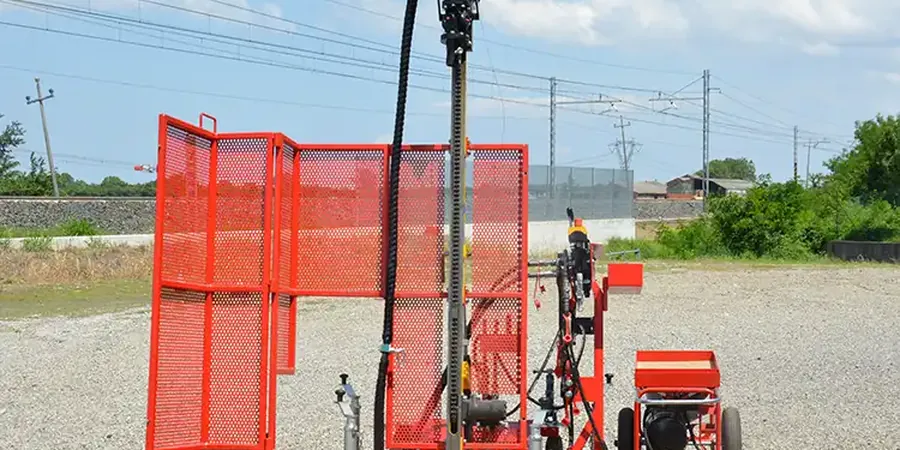
Geotechnical site investigation in Adelaide is the foundational process of understanding the ground conditions before any construction or civil engineering project begins. It encompasses a suite of subsurface exploration techniques designed to characterise soil, rock, and groundwater profiles, enabling engineers to design safe, stable, and cost-effective foundations. In Adelaide's variable landscape—from the soft alluvial clays of the plains to the fractured quartzite and shale of the Mount Lofty Ranges—a thorough investigation is not merely a best practice but a critical risk management tool. Without it, projects face heightened risks of differential settlement, slope instability, or unexpected excavation conditions that can lead to costly delays and structural failures.
Adelaide's geology presents a unique and challenging tapestry that directly influences the scope of any investigation. Much of the metropolitan area is underlain by the Hindmarsh Clay and Hallett Cove Sandstone, with reactive clay soils notorious for their shrink-swell behaviour during seasonal moisture changes. These conditions demand precise classification and strength testing to determine footing depths. The city's western suburbs are dominated by Quaternary dune sands overlying soft estuarine sediments, where high groundwater and potential for liquefaction become primary concerns. In the eastern foothills, residual soils derived from weathered Proterozoic basement rocks can mask highly variable bedrock depths and boulder fields, making a combination of exploratory techniques essential for accurate profiling.
All geotechnical investigations in South Australia must comply with Australian Standards, primarily AS 1726:2017 (Geotechnical Site Investigations), which provides a framework for planning, execution, and reporting. Depending on the project's location and scale, adherence to guidelines from the Environmental Protection Authority (EPA) for groundwater monitoring and the Department of Planning, Transport and Infrastructure (DPTI) for infrastructure works is mandatory. For residential and commercial developments, compliance with the National Construction Code (NCC) and relevant local council development plans ensures that the investigation meets the required safety and performance criteria. A robust investigation report, signed by a suitably qualified geotechnical engineer, is the definitive output that informs earthworks specifications and structural design.
The types of projects that demand a comprehensive investigation range from single-dwelling residential builds on reactive clay sites to large-scale infrastructure like the North-South Corridor tunnels. Any structure imposing significant loads, such as multi-storey apartment blocks, industrial warehouses, or retaining walls over one metre high, triggers the need for a detailed subsurface study. Civil works including bridge construction, embankment fills, and stormwater detention basins also rely entirely on accurate geotechnical parameters. A typical investigation might commence with an exploratory test pit to visually inspect shallow strata and locate services, followed by mechanical drilling to perform an SPT (Standard Penetration Test) for soil strength and sample recovery. In areas with poor access or where continuous soil profiling is required, a CPT (Cone Penetration Test) provides high-resolution data on tip resistance and sleeve friction, crucial for liquefaction analysis and pile design in Adelaide's sandy western suburbs.
The primary purpose is to determine the subsurface soil, rock, and groundwater conditions at a site to inform safe and economical foundation design. In Adelaide, this is crucial due to reactive clays and variable geology, helping to prevent structural issues like cracking from soil movement or differential settlement by providing data for footing depths and earthwork specifications.
An investigation is required under the National Construction Code (NCC) for most structures, especially on problematic soils. It is mandated for commercial, industrial, and multi-unit residential projects, and strongly advised for single homes in Adelaide's reactive clay zones. Any project involving retaining walls, deep excavations, or significant earthworks also necessitates a full investigation to meet council and regulatory compliance.
Adelaide's geology ranges from highly reactive Hindmarsh Clay on the plains to soft estuarine sediments in the west and shallow, weathered bedrock in the foothills. This variability means an investigation must be tailored to the specific site, often combining test pits for shallow assessment with deeper drilling or CPT soundings to quantify clay reactivity, assess liquefaction potential in sands, and accurately map bedrock depth.
The key standard is AS 1726:2017 'Geotechnical Site Investigations', which outlines procedures for subsurface exploration, sampling, and reporting. Additional guidance comes from AS 1289 for soil testing methods and AS 2159 for piling design. Investigations must also align with local planning regulations and EPA guidelines, particularly when groundwater monitoring or potential contamination is involved.